Earn the commute
Why the return-to-office debate is really about equipment

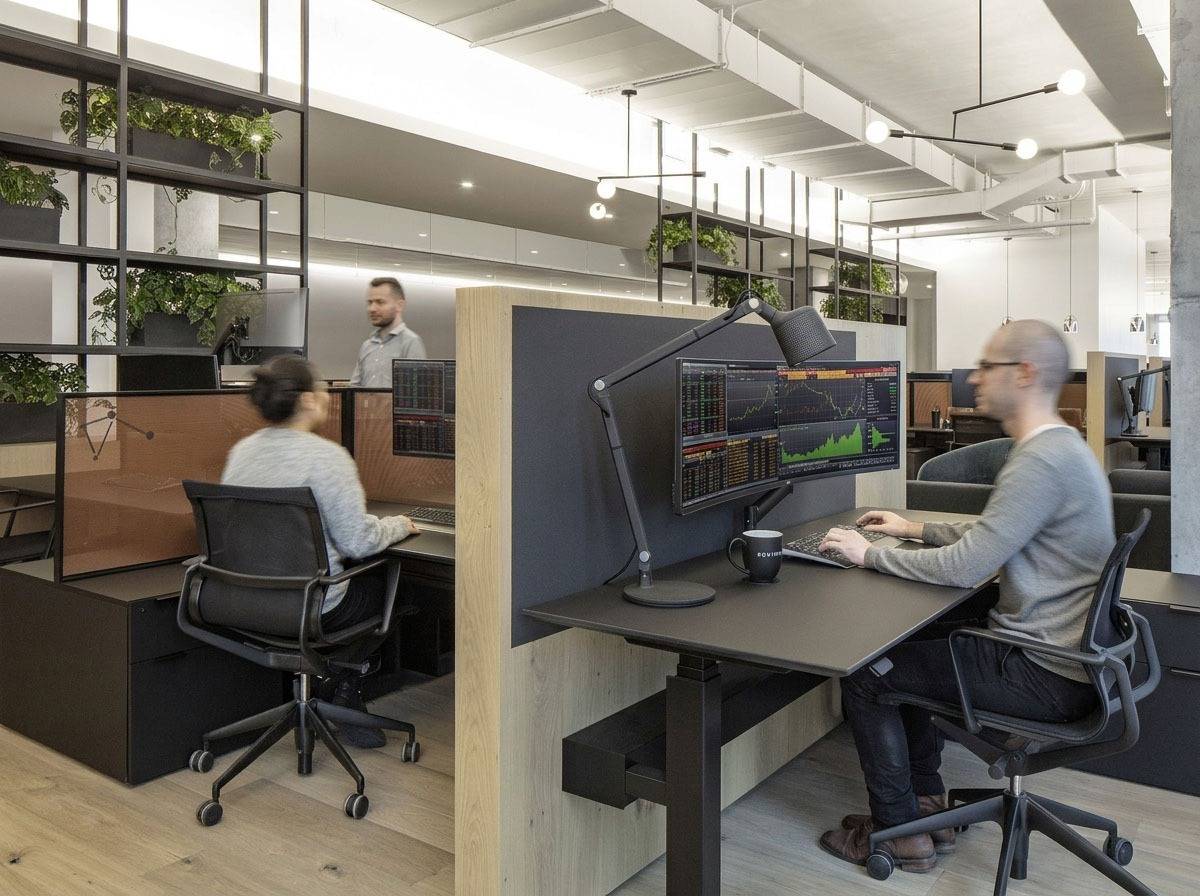
That fundamentally reframes what workplace investment is for. If the office has to earn the commute, then every element of it, from lighting and acoustics to the equipment on the desk, the office itself becomes part of the value proposition rather than a fixed cost. The most expensive hardware asset your company has! The question is no longer 'how do we mandate return,' but 'what can we offer here that people cannot easily reproduce at home.'
One answer is emerging around the desk itself, and specifically around screen real estate.
Luxurious widescreen monitors that stay at the office
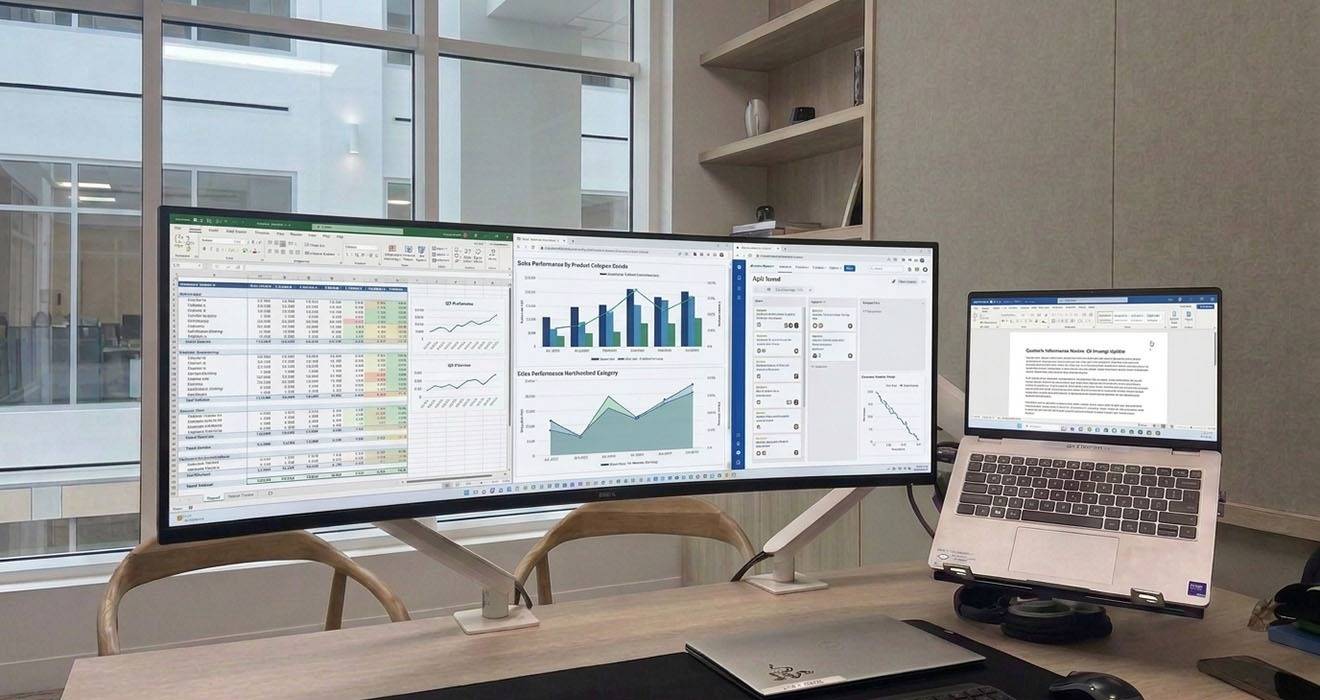
Among the conversations he had at the summit was one with a real estate lead at a well-known fintech, who described exactly how this dynamic played out at their company. Their people were choosing to come in partly to use the ultrawide monitors available at the office. At home, the same setup was impractical, either because the desk space was not there or because the cost of a large curved display was not something individuals wanted to absorb. No delegates our sales director spoke with said they'd funded home ultrawide monitors, making this a tangible and effective way to 'earn the commute.'
It is a small detail, but it captures the 'magnet' principle precisely. A 49-inch ultrawide, or a dual or triple arrangement, is a serious tool for anyone working across multiple documents, data sets, or trading and monitoring applications. It is awkward and expensive to run at home. The office can offer it as standard. When it does, the equipment itself becomes a reason to be there.
Monitor arms are part of the experience
Large displays introduce a practical constraint that is easy to overlook: they need to be positioned properly to be usable. A heavy ultrawide sitting on a desk stand consumes surface area, sits at a fixed height, and cannot be shared or adjusted by people who hot-desk. A monitor arm resolves all three, freeing the worksurface, setting the screen at an ergonomically correct height, and letting each person adjust the position to suit them.
This is where the workplace-as-magnet argument connects directly to specification decisions. If a company is deploying large screens to draw people in, the mounting has to hold those screens reliably and adjust smoothly, day after day, across shared desks. Atdec's Workspace range is built for exactly this: the Ora arm handles single displays up to 38-inch and 8kg or 17.6lb, and Atdec Modular configures into dual, triple, and ultrawide arrangements - any configuration imaginable - for more demanding setups, including the trading floors and monitoring environments where multi-screen work is the norm.
The broader point for anyone specifying a workplace is that 'earn the commute' is not only about coffee, the odd pizza day, and collaboration space. It is also about giving people tools that genuinely work better than what they have at home, including mounting those tools so they stay reliable and adjustable in a shared environment.